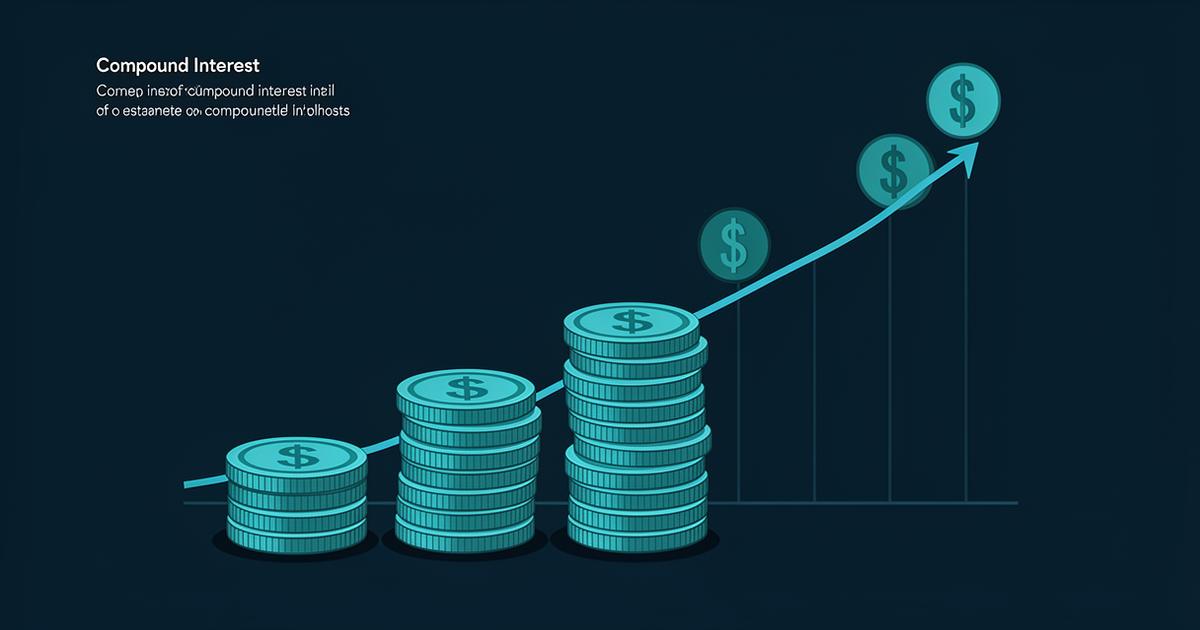
When you deposit money in a savings account or invest in a fund that pays compound interest, the interest earned in the first period gets added to your principal. In the next period, you earn interest on this new, larger balance. This cycle repeats, creating accelerating growth that Albert Einstein allegedly called "the eighth wonder of the world."
For example, $10,000 at 7% simple interest earns $700 per year - always $700. With compound interest, year one earns $700, year two earns $749, year three earns $801.43, and so on. After 30 years, compound interest yields $76,123 compared to just $31,000 from simple interest.